
On this page Show sections
Is this the right service?
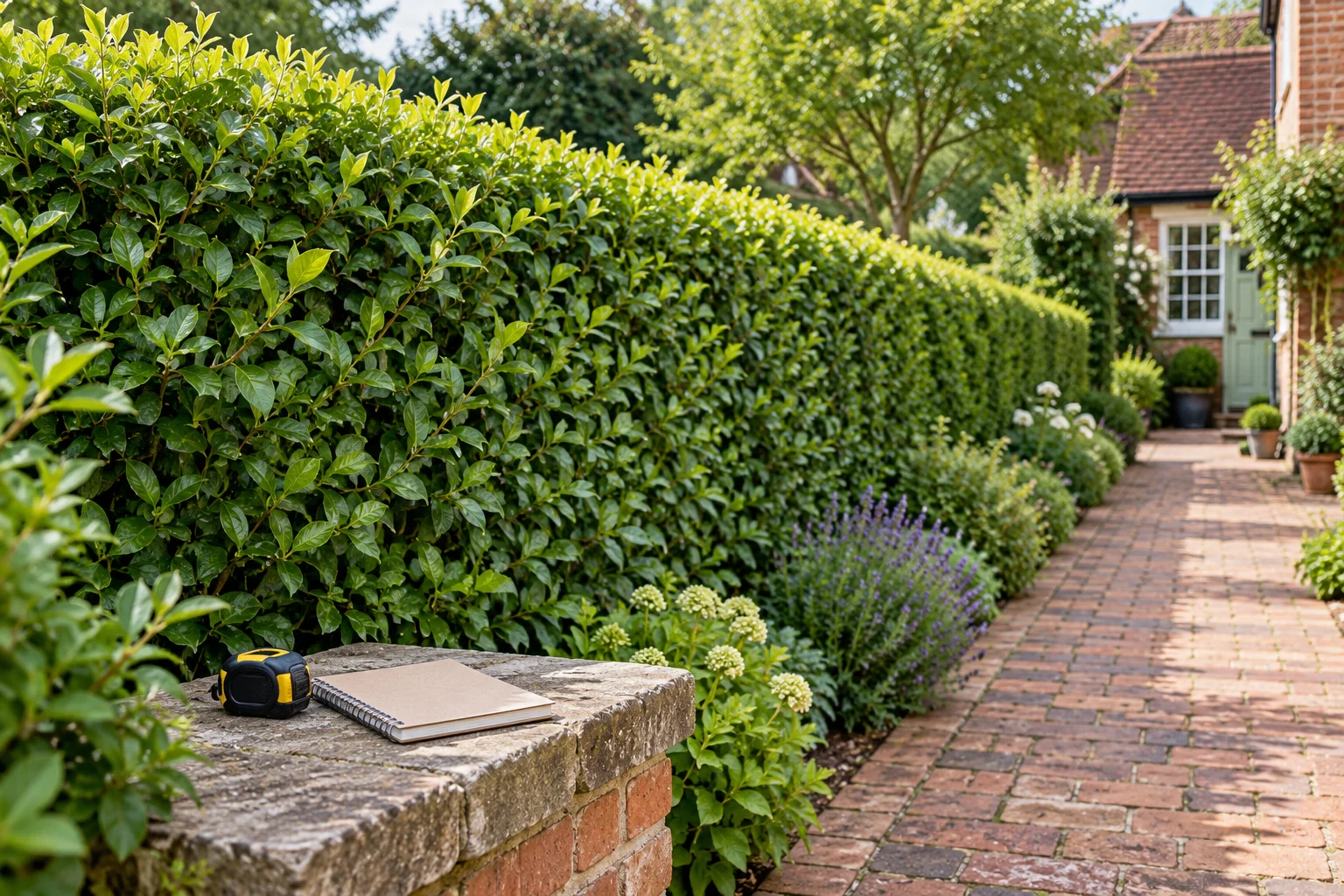
Routine trimming maintains a hedge; reduction changes its height or width more substantially. Not every species will regrow well after cutting into old wood.
Be clear whether you want routine trimming or a substantial change in height or width. State which sides are included and whether neighbouring access is available. For mixed planting, different sections may need different treatment; a single uniform cut should not be assumed suitable.
What the work involves
Agree the finished dimensions, which sides are included and access from neighbouring land. The contractor should check for wildlife and assess whether the proposed reduction is suitable.
Do not disturb active bird nests. Timing alone is not proof that a hedge is clear. Large reductions may need a staged approach and a discussion with neighbours.
What the quotation should cover
- Identify the hedge sections and planting types, if known.
- Agree finished height and width where a reduction is proposed.
- Specify which faces and top are included.
- Record neighbouring access, public-route and wildlife considerations.
- Include arisings removal and any staged or later visits explicitly.
A clear quotation describes the finished result as well as the operation. Ask the business to resolve uncertain inclusions before accepting.
Use the quotation checklist ↗What affects the price?
Hedge length and height; width; species; amount of reduction; working access; traffic or public footpaths; disposal volume.
A site-specific quotation needs the actual scope and conditions. This website does not provide a verified monetary estimate or promise a standard price for your job.
Build your project brief ↗Prepare for an assessment
Photograph the hedge along its length and show gates, level changes and access from both sides where authorised. Mention areas of bare growth or a previous severe cut without diagnosing the cause. Tell the business if privacy or screening must be retained while the work is planned.
Our shared planner gathers the work, access, location and what you want to achieve. You can change the details before taking the next step.
Permission comes before work
Check applicable tree protection, planning requirements, ownership, wildlife and neighbouring access. A quotation is not permission to proceed. Use official Bedford resources and ask the appropriate authority about uncertainties.
Start the official tree-protection checks ↗Your next steps
- Describe the work and the change you want in the planner.
- Review your brief and resolve any access or permission questions.
- Review your contact details and send your request. We’ll be in touch to discuss the work.
Start with the work you have in mind.
Start with the postcode, the work you have in mind and any access considerations.
Prepare your enquiryNo obligation. A site assessment may be needed to confirm the work and price.
Your questions
Will a bare hedge recover after a hard cut?
Do not assume it will. Species, condition and the proposed operation matter, especially for conifers. Ask for advice on regrowth and whether staged work or another approach is more suitable.
Can work proceed outside the usual nesting season?
A calendar date does not establish that an active nest is absent. The contractor should consider the actual situation and explain how findings may affect the plan.
Can tree and hedge work be quoted together?
Yes, a business may assess a combined project, but each operation, access requirement and finished result should remain clear. A combined booking should not hide exclusions or unresolved permissions.
How is a quote arranged?
Describe the work, add your contact details and send the request. We’ll be in touch to discuss the project and arranging a quotation. A site visit may be needed before a price can be confirmed.