
In this guide Show sections
General guidance, not a professional assessment. Confirm site-specific advice and current requirements before work.
Planning tree work in Bedford or nearby?
Start with the postcode, the work you have in mind and any access considerations.
Prepare your enquiryNo obligation. A site assessment may be needed to confirm the work and price.
Before you make arrangements
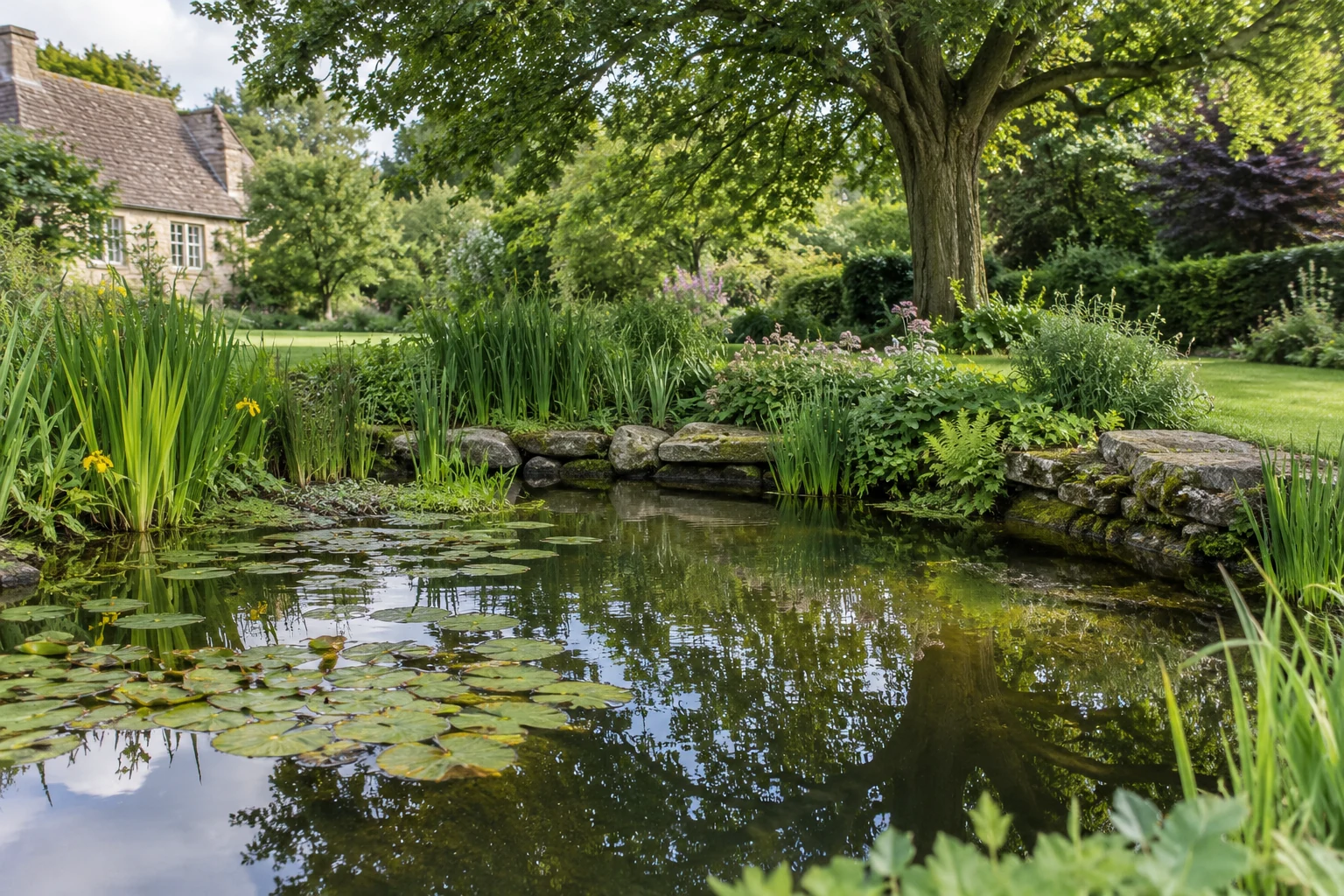
Describe the pond and surrounding features from accessible ground. Include rough vegetation, log piles, known wildlife observations and any previous ecological advice. Do not move habitat material, drain water or clear a route to investigate. Our garden preparation guide helps distinguish useful planning information from potentially harmful advance clearance.
Look beyond the edge of the pond
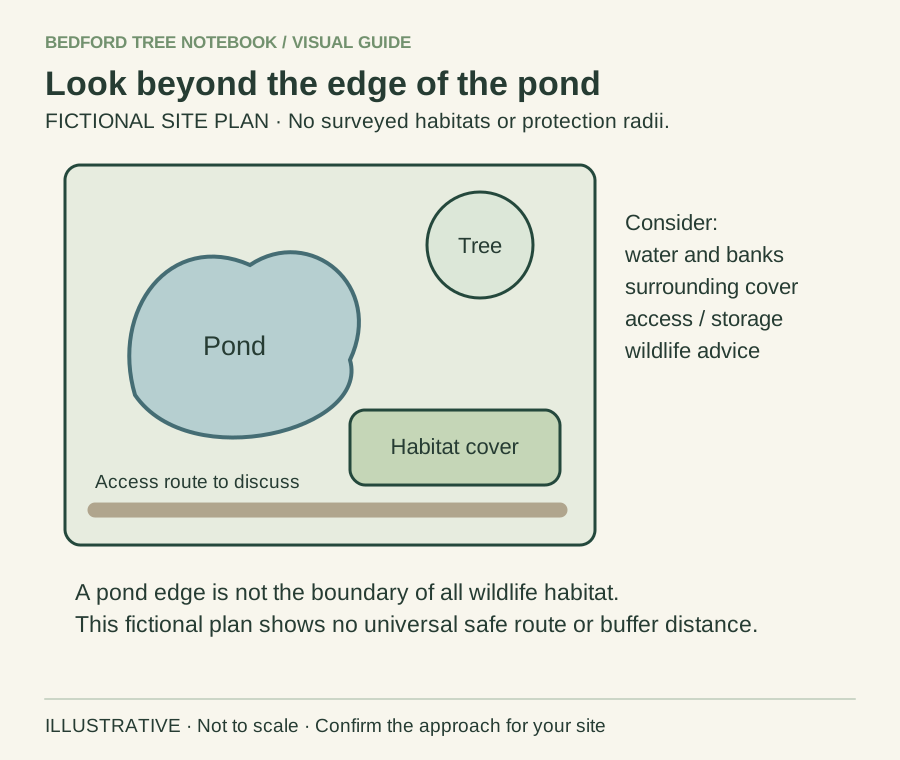
- Tell the contractor about the pond, banks, nearby cover and known wildlife.
- Ask whether competent ecological advice or surveys are needed for the actual work.
- A particular month or a clear-looking pond does not provide a wildlife all-clear.
Background sources: GOV.UK guidance · GOV.UK guidance
Show the habitat as part of the site
A labelled wide photograph or simple plan should connect the trees with the pond, access route and surrounding vegetation. Mention features that may be obscured in a summer photograph or hidden behind a hedge. If several contractors are involved, give each the same basic site information.
The tree-location-plan guide explains how identifiers and fixed features support a clear brief. You do not need to draw a habitat boundary yourself. Record what is known and what has not been assessed. A garden feature described only as unused space may otherwise become a proposed storage area or machine route before anyone has considered its function.
Explain the actual tree-work objective
Say whether the reason is a specific branch concern, pond shading, access or another garden change. A request for more light over water does not itself identify an appropriate pruning operation. A tree adviser can consider the specimen, while ecological advice may be relevant to the effect on habitat.
Our shade-options guide helps phrase the desired outcome without prescribing cuts. Avoid assuming that a complete clearance will improve every pond or that all shade is undesirable. The plan should make competing objectives visible rather than asking a contractor to choose between them after the work date and price have already been agreed.
Raise protected-species questions early
Some species and their habitats have specific legal protection. The Natural England great crested newt guidance explains that relevant habitat includes land around ponds as well as the water. Do not assume protection ends at the pond edge or that a generic distance in a diagram gives clearance.
Tell the business about known sightings and seek appropriate ecological advice where the proposal could affect protected species. This does not mean every garden pond requires an identical survey or licence. It means the actual activity and setting need consideration before habitat is disturbed. Absence of an observation by the householder is not a professional assessment of absence.
Do not rely on a safe calendar date
The timing appropriate to one part of the project may not settle all wildlife considerations. Tree species, active nests, potential bat features, pond use and ground conditions can interact. Discuss timing with the relevant professionals rather than treating a winter booking as automatic ecological clearance.
Read active bird nests and tree work and suspected bat features. If a specialist recommends a particular timing or method, record which activity it covers and any conditions. An instruction for one tree or habitat feature should not become a general permission to clear the whole garden or move surrounding logs during preparation.
Agree access without disturbing habitat first
Tell the contractor where people and equipment normally enter and which parts of the route include pond margins, soft ground or habitat material. Do not clear vegetation, remove log piles or bridge the pond edge in advance to make the job appear easier. Those changes can be part of the issue that needs assessment.
Use narrow garden access to record practical constraints. Ask the business whether the proposal is feasible with those features retained and whether another method needs consideration. If safe or lawful access has not been established, a provisional quotation should say so. The household should not solve an unresolved route by undertaking unassessed habitat work itself.
Make material handling explicit
Branches, timber, chippings and stump grindings are different materials with different handling arrangements. Agree where they may be placed and which areas are excluded. Do not use a pond edge or a wildlife pile as a convenient destination simply because the material came from a tree.
Our waste-removal scope guide helps separate the streams. If retained timber is intended for habitat, ask how that fits with the ecological and garden plan rather than treating every pile as beneficial regardless of location. The contractor’s operational arrangements and any habitat advice need to agree about storage, loading and final clearing of the working area.
Keep water and equipment responsibilities clear
Mention pumps, electrical supplies, liners, covers, ornamental features and known buried services without handling or exposing them for inspection. The tree contractor needs to know what is present and which matters require another competent person. A work quotation should not silently assume responsibility for pond systems outside its scope.
The underground-services guide is relevant where grinding or excavation is proposed. Do not lift inspection covers or disturb wiring to demonstrate a route. Ask who will assess any needed preparation and whether the agreed job can proceed without altering the pond. Keep equipment questions separate from wildlife questions; settling one does not settle the other.
Check tree controls as well as habitat
A wildlife-aware proposal still needs the relevant tree-protection and ownership checks. Use Bedford TPO records to start and establish the correct authority for the actual property. Any ecological advice and planning decision should relate to the operation being instructed.
If the recommendation changes from light pruning to removal or stump excavation, review the whole scope before agreeing it. A change can affect access, ground disturbance and the earlier advice. Keep written records of who resolves the controls and how the team will receive the final instructions. An informal statement that the garden is a wildlife garden is not a substitute for a specific, workable proposal.
Review the completed project against the plan
After the working area has been released, compare the result with the agreed tree scope, material locations and any habitat-related conditions. Ask about deviations or outstanding follow-up before another contractor begins landscaping. Keep the relevant advice with the final records.
Our end-of-visit checklist helps frame that conversation. If the work was part of a broader pond or garden project, identify who takes responsibility for the next stage. Avoid judging ecological success from a single tidy photograph: retained features, agreed methods and later observations may matter more than whether every corner looks freshly cleared on completion day.
Your next step
Include the pond and surrounding habitat in the first brief, then coordinate arboricultural and ecological advice where needed. Avoid advance clearance or assumed seasonal permission. Agree access, material handling and the exact operation before booking, using the quotation checklist to make responsibilities and remaining questions visible.
Turn the advice into a useful project brief.
Start with the postcode, the work you have in mind and any access considerations.
Prepare your enquiryNo obligation. A site assessment may be needed to confirm the work and price.
Sources & further reading
- Natural England: great crested newts, protection and licences
- Natural England: wild birds, protection and licences
- Natural England: bats, protection and licences
- Bedford Borough Council: protected trees
Sources checked 31 October 2026. How we prepare guidance.