
In this guide Show sections
General guidance, not a professional assessment. Confirm site-specific advice and current requirements before work.
Planning tree work in Bedford or nearby?
Start with the postcode, the work you have in mind and any access considerations.
Prepare your enquiryNo obligation. A site assessment may be needed to confirm the work and price.
Before you make arrangements
Identify who controls the land, who may commission advice and who holds the tree records. Note any shared entrances, neighbouring ownership or public routes. A caretaker’s observation, a formal inspection and a work quotation are different records. The tree consultant or contractor guide helps define which service is being commissioned before a date is arranged.
Manage the site, not just one visit
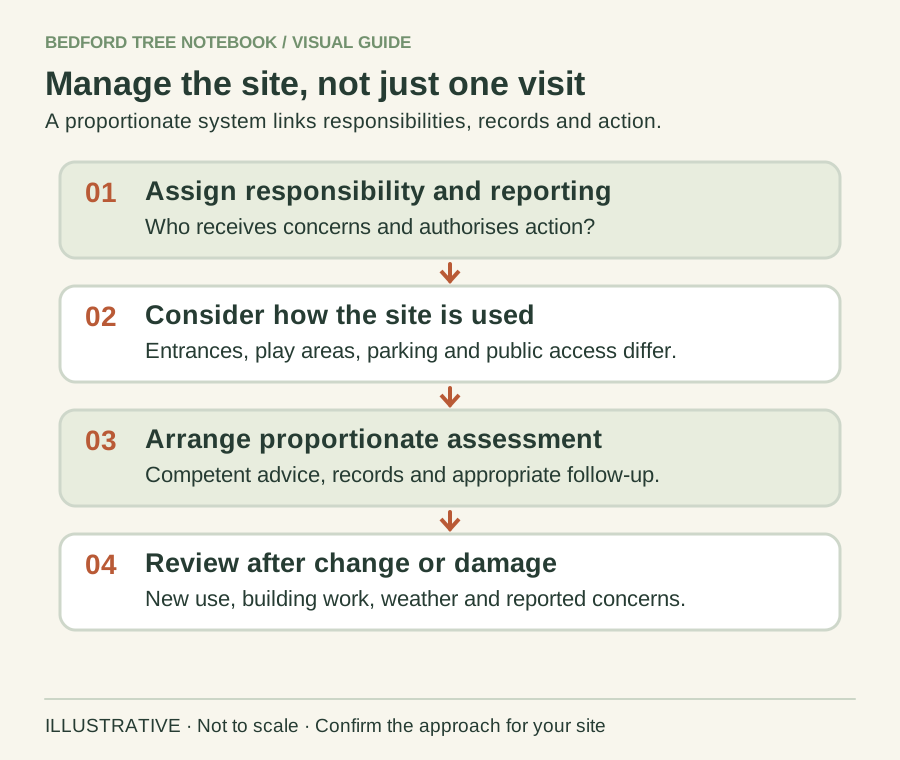
- Keep a clear reporting and authorisation route for concerns.
- Inspection scope and review timing should reflect the actual site and risk.
- Coordinate access, site users, contractor work and records; a quotation alone is not a management system.
Background sources: GOV.UK guidance · National Tree Safety Group guidance
Connect tree care with premises responsibilities
Use the setting’s actual governance arrangements: a proprietor, trust, local authority or other responsible body may have different roles in authorising work. Do not assume the person who normally books grounds maintenance can approve every tree-management decision or enter neighbouring land.
The Department for Education estate guidance addresses trees within premises health and safety. Nursery arrangements should be checked against the responsibilities and guidance applying to that particular setting. Ask the responsible person how tree observations, assessments and actions enter the existing premises system, rather than creating an informal parallel record held only by one member of staff.
Describe how the grounds are used
Provide a site plan showing trees and the places people regularly occupy: entrances, waiting areas, play spaces, outdoor classrooms, parking and access routes. Tell the adviser about seasonal or occasional uses as well as the normal timetable. A quiet corner may become a gathering point for an event.
The National Tree Safety Group guidance supports a proportionate approach that considers the setting. Do not convert that into a claim that every tree requires an identical annual survey or pruning cycle. Ask a competent adviser to explain the appropriate management and review arrangements for the actual grounds and their use.
Make observations easy to report
Staff need a clear way to pass on a new concern, including which tree they mean and what they noticed. A simple identifier on a plan is more reliable than “the large tree near the gate” where there are several gates or entrances. The tree-location-plan guide explains that connection.
Do not ask staff or children to approach a potentially unstable tree to collect measurements or close photographs. A report should distinguish observation from diagnosis and say whether an area has already been kept out of use. Clarify who receives the report during holidays or when the usual premises contact is absent, so it is not left inside an unattended inbox.
Commission advice before prescribing operations
Explain the question the school needs answered: a particular observed change, the management of an established tree group or a conflict with proposed facilities. Provide earlier reports and identify any recommended actions that remain outstanding. A maintenance quotation should not silently replace an assessment requested for another purpose.
If the advice recommends work, ask for tree identifiers, a specific scope and the reason for the recommendation. A general desire for an open-looking site is not a complete pruning specification. Our young and mature tree guide helps frame why age and condition affect the conversation. Keep any proposal for new planting or play equipment within the same site planning discussion.
Check controls and site constraints
School ownership does not itself remove tree-protection, wildlife or access requirements. Establish the relevant planning authority and check the trees and proposed work against the appropriate records. Our Bedford TPO guide is a starting point, not a substitute for property-specific checks.
Tell the adviser about potential nesting or bat features and any planning conditions linked to the premises. Ask who will resolve the checks and maintain the evidence before work is authorised. A school holiday date is an operational preference, not proof that wildlife considerations are absent. If the scope changes after an inspection, revisit the relevant approvals rather than relying on an earlier general agreement.
Plan the visit around people and safeguarding
Discuss the school’s visitor and contractor arrangements before the quotation visit and again before work. Confirm arrival, signing in, identification, supervision and contact arrangements according to the setting’s policies. Do not publish gate codes or sensitive site-security details in a general project document.
Ask how the contractor will coordinate working areas with the premises team and how pupils, staff, visitors and deliveries will be kept separate from the work. The HSE public-safety guidance is relevant background. An empty timetable slot does not itself create a safe worksite; responsibilities and actual access arrangements still need to be agreed.
Coordinate the wider site activities
Check cleaning, clubs, holiday provision, lettings and other contractors, not only the main school day. A tree team arriving during a nominal holiday may still encounter people using a sports facility or shared car park. Give the business a realistic account of that use before agreeing its method and programme.
Use parking and shared access and preparing a garden or outdoor space to identify practical questions. Ask who has authority to pause conflicting activity and who will communicate changes. Do not leave teachers or reception staff to improvise traffic or exclusion arrangements after vehicles have arrived.
Agree a complete commercial scope
The written proposal should connect the tree advice with the work being purchased. Include identifiers, operations, permission responsibilities, waste handling, protection of retained features and arrangements for any follow-up. Clarify what the school must prepare and what the contractor will provide.
The quotation checklist helps compare like-for-like proposals. If separate contractors will handle tree work and reinstatement, define the handover and the condition in which the site will be left. Ask who checks that paths, play surfaces and access routes are released for normal use. A completion invoice does not replace the operational handover or close outstanding recommendations automatically.
Carry the record beyond the visit
Keep the current plan, advice, permissions, work specification and completion record together in the premises system. Record unresolved items and recommended reviews with a responsible person, rather than simply storing the report as an attachment. If staff change, the next premises lead should be able to understand what remains to do.
Where the grounds’ use changes, tell the adviser so the management arrangements can be reconsidered. New play areas or routes can change the context around retained trees. The aim is an understandable cycle of observation, competent advice, authorised action and review, not a large document that nobody can connect with the tree standing beside the entrance.
Your next step
Begin with the responsible premises lead and a clear site brief. Commission the advice needed, then translate recommendations into authorised work and practical access arrangements. Keep tree identifiers and outstanding actions visible in the school or nursery record. For the contractor’s scope, use the quotation checklist alongside the setting’s own procurement and safeguarding requirements.
A churchyard has a different approval context: planning churchyard tree care distinguishes site authority, ecclesiastical processes and civil tree controls.
For residential care grounds, Bedford care-home tree management considers access, residents, staff reporting and contractor arrangements.
Turn the advice into a useful project brief.
Start with the postcode, the work you have in mind and any access considerations.
Prepare your enquiryNo obligation. A site assessment may be needed to confirm the work and price.
Sources & further reading
- Department for Education: school estate health and safety
- National Tree Safety Group: common sense tree-risk management, 2024 summary
- HSE: managing public safety during tree work
- Bedford Borough Council: protected trees
Sources checked 31 October 2026. How we prepare guidance.