
In this guide Show sections
General guidance, not a professional assessment. Confirm site-specific advice and current requirements before work.
Planning tree work in Bedford or nearby?
Start with the postcode, the work you have in mind and any access considerations.
Prepare your enquiryNo obligation. A site assessment may be needed to confirm the work and price.
Before you arrange the work
Gather the address, photographs, any listing information and a plain description of the intended work. Do not assume that a listed building automatically makes every tree protected, or that the absence of a Tree Preservation Order settles every planning question.
Build a clear property record
Bedford Borough Council’s planning resources allow you to look for tree-protection information and listed-building descriptions. Save the relevant references, but check that each record actually relates to your site. A neighbouring address, an old estate name or an imprecise map pin can send an enquiry in the wrong direction.
Our guide to Bedford’s tree-protection maps explains why a map is a starting point. Include the tree’s position relative to the house and boundary when asking the council to clarify uncertainty.
Separate the proposed operations
Pruning a tree, taking down a wall to gain access and altering a historic gate are different activities. Tell the contractor if access depends on changing a structure or attaching equipment to it. Ask the relevant planning or conservation officer what must be checked before anything is disturbed. This guide does not determine whether listed-building consent is required for a particular alteration.
If the property has development approvals, read our planning-conditions guide too. Keep the decision notice and approved drawings together.
Plan a visit around the building
Explain which surfaces, garden features and entrances need protection. Photograph their existing condition from safe ground-level positions. Ask how branches and equipment would move through the site and whether a visit is needed before a reliable quotation can be issued.
A quotation should describe the actual tree work and access assumptions. “Make the garden tidy” is too vague when a historic structure or restricted entrance affects the method.
Make a short schedule of sensitive features
An enquiry near a historic building is easier to assess when the surroundings have names. List the gate used for access, the wall beside the tree, the garden steps and any fragile outbuilding roof. Match those names to a few photographs. This avoids a conversation in which “the old wall” means a different structure to each person. Explain whether a feature can be moved, must remain in place or needs advice from someone other than the tree contractor.
Keep that schedule proportionate. You do not need to produce a conservation report yourself, and photographs cannot establish a structure’s load-bearing capacity. The useful homeowner contribution is to identify constraints and uncertainty. Ask the contractor to say which assumptions require inspection before a method or price can be confirmed. If an adviser later proposes an alteration to a feature, put that proposal back into the approval discussion before treating it as an agreed access solution.
A hypothetical access decision
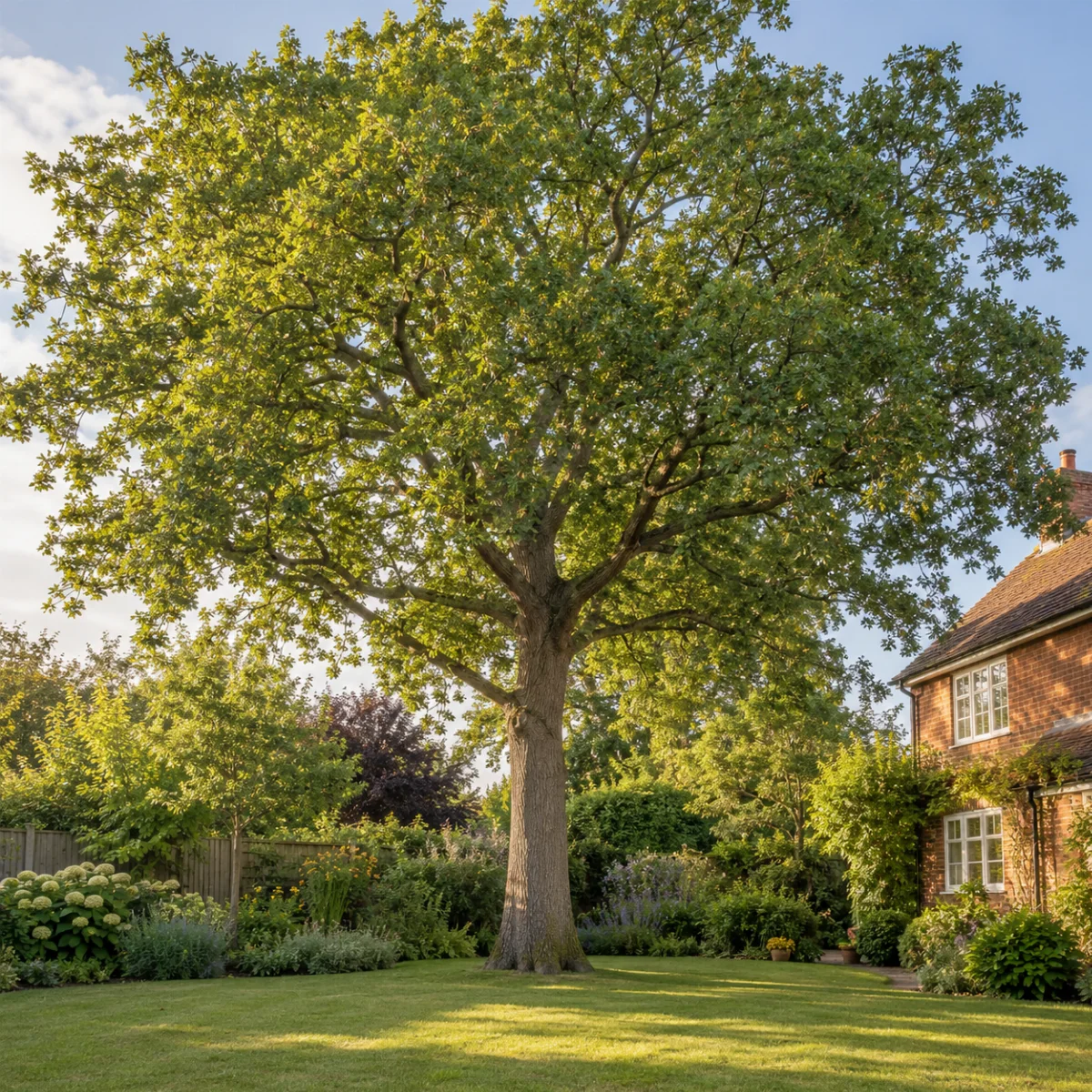
Imagine a homeowner wants pruning beside an old brick house. The first photograph shows a broad lawn, so access appears straightforward. A second photograph reveals that the only entrance is through a narrow gate in a historic boundary wall. The important discovery is the entrance constraint, not a conclusion that a particular machine should be used.
A useful next conversation asks whether the proposed work can be completed through that existing opening, whether another authorised route exists and whether any different operation would better meet the garden objective. Removing part of the wall should not become an informal extra arranged on the morning of the job. Its implications need separate advice. This example illustrates how one access detail can change a proposal; it is not a Bedford case study or a claim about the permissions for a particular property. Our access-through-the-house guide covers another route that may need careful assessment.
Ask each adviser a question they can answer
Keep the tree recommendation, the building question and the planning position separate in your notes. A tree professional can explain the proposed operation and its practical effects. A conservation or planning officer can clarify the relevant control or application route. A building specialist may be needed to assess a vulnerable structure. One person’s involvement should not be presented as approval of every part of the project.
When sending an enquiry, say which question remains unresolved: identifying an order, checking an access alteration or understanding an approved drawing. Attach the relevant reference rather than forwarding an entire collection of unrelated property papers. Ask for a response that identifies the operation and feature being discussed. If someone recommends another professional, establish the purpose of that appointment before paying for it. This approach reduces repeated conversations and makes the eventual quotation easier to compare with the advice actually received.
Keep permissions and the price together
Once a suitable scope is established, compare the tree-work quotation with the relevant documents. Check that the tree identifier, intended operation and assumptions about access agree. If the business excludes protection of a particular surface or clearance of material through a restricted entrance, resolve who will handle that before accepting the price.
Keep the final versions in one folder, with dates and a short note of who issued them. A contractor should not have to guess which of several drawings is current. Equally, a permission document should not be treated as a complete description of clean-up, timing or payment arrangements. Those are contractual matters to agree with the business. Use payment stages and written records to organise them. If the approved work and the affordable proposal no longer align, return to the planning conversation rather than quietly reducing or substituting the operation.
Questions before you choose a date
Before fixing the appointment, ask who will brief the team about the sensitive features and how the agreed route will be kept available. Confirm whether a representative needs to be present and whether another adviser must attend or provide information first. Record any dependency that could prevent work from proceeding, such as an unresolved access question or a document the contractor has not seen.
Also ask what happens if a feature is found to be more fragile than expected. The answer should explain the process for stopping and reassessing; it should not be a promise that every uncertainty can be solved during the visit. Finally, keep a record of the agreed condition of gates, walls and surfaces before work. After the contractor releases the area, compare the result with that record and the written scope. The end-of-visit checklist provides a practical structure without asking you to certify either a building or a tree.
Your next step
Confirm the relevant checks with the council and share the written response with the contractor. Use the quotation checklist to record the agreed scope before choosing a date.
Turn the advice into a useful project brief.
Start with the postcode, the work you have in mind and any access considerations.
Prepare your enquiryNo obligation. A site assessment may be needed to confirm the work and price.
Sources & further reading
- Bedford Borough Council: viewing tree protection and listed-building descriptions
- GOV.UK: Tree Preservation Orders and conservation areas
- Historic England: tree consents
Sources checked 31 October 2026. How we prepare guidance.